The Olfactory Edit: How to Choose Home Candles That Actually Perform
Scent is the part everyone shops for. Wax, wick and jar shape are the parts that decide whether you can smell it from the doorway, and how many evenings it lasts.
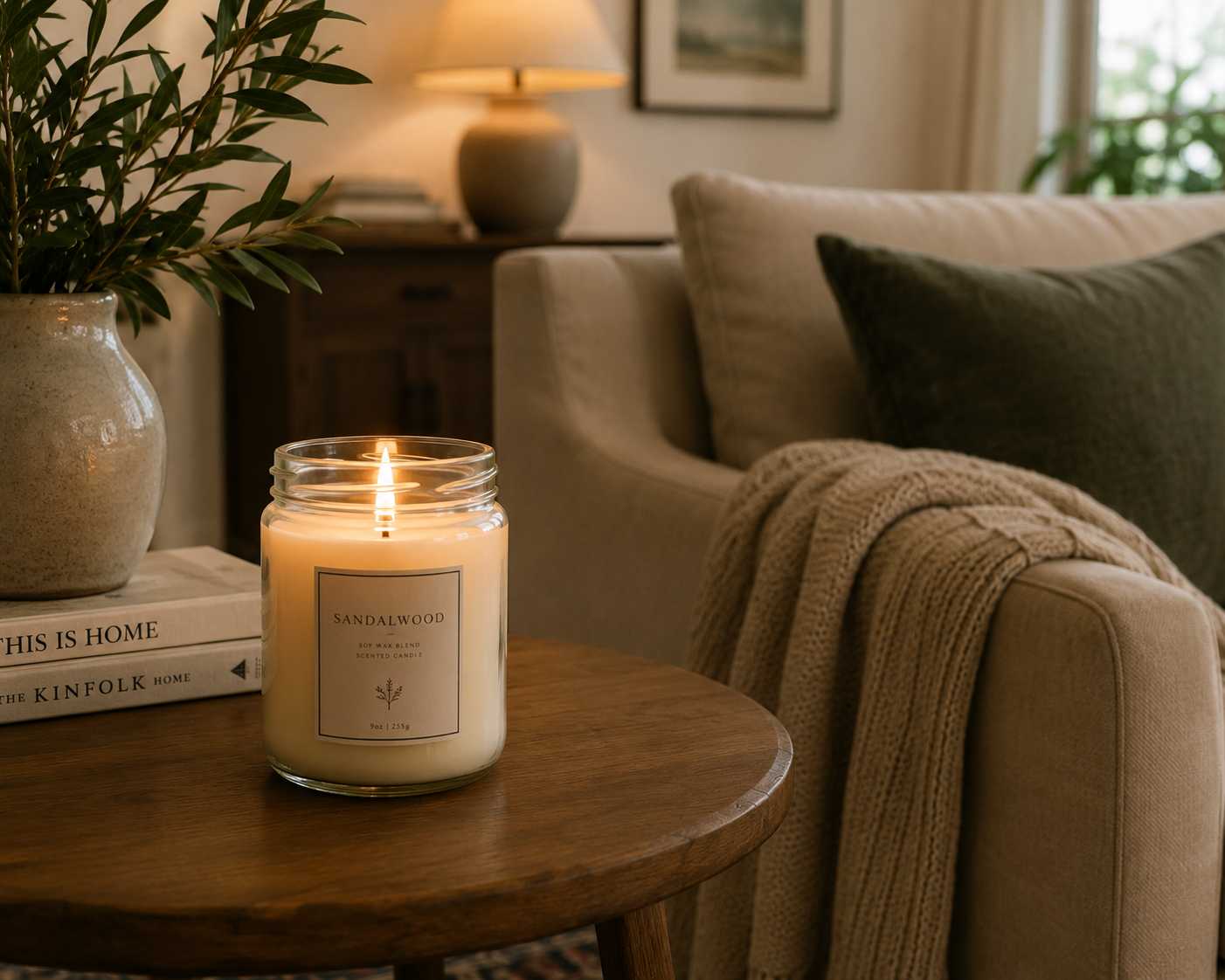
Almost everyone buys a candle the same way: smell it in the shop, or read the scent name online, and decide. That works about half the time. The other half is the candle that smelled wonderful unlit and does nothing once burning, or the one that tunnels down a shaft and strands two thirds of the wax against the glass.
Both of those outcomes are predictable from the specification, if you know which parts to read.
Cold throw and hot throw are different things
This is the single most useful distinction in candle buying, and almost no listing explains it.
Cold throw is how a candle smells unlit. It comes from fragrance oil evaporating slowly off the surface of solid wax at room temperature. It is what you experience sniffing a jar in a shop.
Hot throw is how it smells burning, when a pool of melted wax is releasing oil far more actively across a much larger surface. It is what you actually bought the candle for.
They do not reliably predict each other. A candle can have a beautiful cold throw and a weak hot throw, usually because the fragrance is concentrated in top notes that burn off quickly. The reverse happens too: a jar that smells faint unlit can fill a room once the pool forms, because its fragrance sits in heavier base notes that need heat to release.
The practical consequence is that shop sniffing is a poor predictor, and reviews are a better one. When people say a candle “smells amazing but you can’t smell it burning”, they are describing a cold throw and hot throw mismatch.
What drives hot throw: fragrance oil concentration, the wax carrying it, and the surface area of the melt pool. A wide jar with adequate wicks beats a small jar with a strong fragrance almost every time.
Wax: what each one is actually good at
Wax is not a moral choice with a right answer. Each type is good at something and worse at something else.
Paraffin is petroleum-derived and the traditional candle wax. It is the best fragrance carrier of the common waxes, holding a high oil load and releasing it readily when melted. That is why it still dominates fragrance-led candles. It burns hotter and produces more soot than plant waxes.
Soy burns cooler and slower, with less soot, and is renewable. It is a less efficient fragrance carrier, so a pure soy candle typically has a gentler throw than a paraffin one of the same fragrance load. It also tends to develop frosting, the pale crystalline bloom on the surface, which is cosmetic rather than a fault.
Coconut wax is the premium plant option: it holds fragrance better than soy, burns very cleanly and slowly, and has a low melt point that helps it throw scent at lower temperatures. It costs more, which is why it turns up mostly at higher price points and often blended rather than pure.
Beeswax is the outlier. It burns longest and cleanest of all, and has a faint natural honey scent of its own. That natural scent is exactly why it is rarely used for fragranced candles, since it interferes with anything added. Beeswax is for unscented candles where burn quality and a warm flame colour are the point.
Blends are the honest middle. Most well-known scented candles are soy and paraffin mixed precisely to get paraffin’s throw with some of soy’s cleanliness. A listing saying “soy blend” is not hiding something; it is describing a deliberate compromise. What is worth noticing is when a listing says “plant wax blend” without naming the plant, which tells you considerably less.
Wicks change more than you would expect
Cotton wicks are the default, and fine. Cheaper ones use a paper or metal core to stay upright, which can burn hotter and sootier.
Natural-fibre wicks curl slightly as they burn, which helps them self-trim and keeps the flame smaller and cleaner. More forgiving if you occasionally forget to trim.
Wooden wicks are a different mechanism altogether. A flat wooden strip heats as the wax burns off it, releasing pockets of moisture and resin that crackle softly. The flame is long and horizontal rather than a teardrop, which reads much more like a hearth.
They need different care, and this is where people give up on them. You do not trim a wooden wick to a quarter inch. You snap off the blackened carbon to leave about an eighth of an inch of clean wood, and you hold the lighter to it for ten to twenty seconds rather than a quick touch. A wooden wick that keeps going out almost always needs one of those two things, not replacing.
Wick count matters most in relation to jar width. One wick in a wide jar is the classic tunnelling setup. Three wicks in a narrow jar burns through wax fast and can get uncomfortably hot in a small room. Two or three wicks across a wide surface is the arrangement that produces a genuinely room-filling throw.
Jar shape is a performance specification
This is the part nobody thinks about, and it predicts more than the marketing copy does.
Tall narrow jars are efficient. The flame melts a small surface, so a single wick can maintain a full pool while consuming little wax per hour. They also tunnel less, because the wax has a shorter distance to travel to reach the glass. The catch arrives in the last third: as the level drops, the flame sits deep inside the jar, airflow is restricted and the melted surface is further from the room, so scent throw fades noticeably before the wax runs out.
Wide shallow jars do the reverse. The melt pool stays close to the room for the whole life of the candle, so fragrance stays consistent from first burn to last. That is a real advantage, and the trade is faster consumption, since a larger exposed surface loses more wax per hour.
So when a brand claims consistent fragrance from first burn to last, check the proportions. On a wide jar, that claim is usually true. On a tall one, it is optimistic.
How to compare value properly
Candles are priced by size, but size is not what you are buying. Hours of scent is.
Divide the burn time by the wax weight to get hours per ounce, and compare that instead of price per jar. Across candles we have looked at, the spread is wide: a tall single-wick jar can reach nearly 7 hours per ounce, a typical single wick around 4.5, and a three-wick candle closer to 3. That means a heavier three-wick candle can easily deliver fewer hours than a lighter single-wick one.
Two traps in that calculation:
- Check whether the weight is wax or total. If a listing gives “34 oz” and an item weight of 2.1 lb, those are the same number, so the figure includes the glass. Glass can be half a candle’s weight.
- Treat “up to” as a laboratory best case. A brand quoting a range, say 110 to 130 hours, is being more honest about the fact that burn time depends on how you use it.
And if a listing publishes no burn time at all, you cannot compare it on value. That may be fine if you are buying it for atmosphere, but know that is what you are doing.
What more money actually buys
Candle prices span an enormous range, and it is worth being clear about where the money goes.
At the everyday tier, you are buying fragrance load and burn hours. These are usually paraffin or soy blends with cotton wicks in plain glass, and the good ones perform very well on throw per pound. This is where the value maths above matters most.
At the mid tier, you tend to get better wax formulations, more considered wick sizing, a lidded or reusable vessel, and more distinctive fragrance composition rather than a familiar accord.
At the luxury tier, a significant share of the price is perfumery and vessel. Fragrances are composed like fine perfume with more complex development, and the container is designed as an object you keep. Burn time per pound is often no better than mid tier, and sometimes worse.
That is not an argument against expensive candles. It is an argument for knowing which thing you are paying for, because if you want a room to smell of something for 150 hours, the everyday tier may serve you better than a luxury jar that burns for 50.
Room by room
Kitchen. Fresh citrus, herbal and green scents. They cut through cooking smells rather than layering onto them, which is why sweet gourmand fragrances rarely work here.
Living room. Warm woods, sandalwood, amber, and mild spice. These read as settled and social, and they hold up in a larger space, so this is where a multi-wick candle earns its faster burn.
Bedroom. Soft and low-key: lavender, vanilla, light florals, clean cotton. Keep the intensity down. A strong candle in a small room stops being pleasant quickly, and a single wick is often the better choice here.
Bathroom. Clean, fresh and slightly sharp: eucalyptus, sea salt, light citrus. Bathrooms are small and often humid, so a modest candle goes a long way.
Entryway. This is the scent people associate with your home, since it is the first thing they meet. Something distinctive and not too food-like works best.
One thing worth knowing: you stop smelling a scent you are sitting in. Olfactory adaptation means the candle you cannot smell after twenty minutes is still perfectly noticeable to someone walking in. Do not keep buying stronger candles to chase a sensation your nose has simply tuned out.
Getting the most out of the one you buy
- The first burn sets everything. Wax has a memory: it melts outward to a certain diameter, then tends to repeat that diameter forever. Let the first burn liquefy the surface all the way to the glass, which takes two to four hours on a wide jar. Cut it short and you have permanently set a tunnel.
- Trim before every burn, to a quarter inch for cotton, or snap the carbon off a wooden wick. Long wicks mean tall flames, faster consumption and soot.
- Burn long, not often. Each relight spends wax re-melting a pool that had set. Fewer, longer burns get more hours from the same jar.
- Keep it out of draughts. A flickering flame is a flame burning unevenly and faster.
- Use the lid. Fragrance oils evaporate from an exposed surface over months, so an unlidded candle on a shelf weakens before you finish it.
- Stop at half an inch of wax. Below that the flame sits close enough to the base to overheat the glass.
- To reclaim the jar, freeze it for a few hours and the last of the wax lifts out in one piece.
The short version
Read the wick count against the jar width, check whether the quoted weight is wax or packaging, divide burn time by wax weight before comparing prices, and treat a shop sniff as information about cold throw only. Then buy the scent you like, in the tier that matches what you actually want from it.