How to Make a Room Feel Warmer With Lighting: Simple Ideas That Work
A cold-feeling room is rarely a paint problem. It’s almost always a lighting one, and it’s one of the cheapest things in a home to fix.
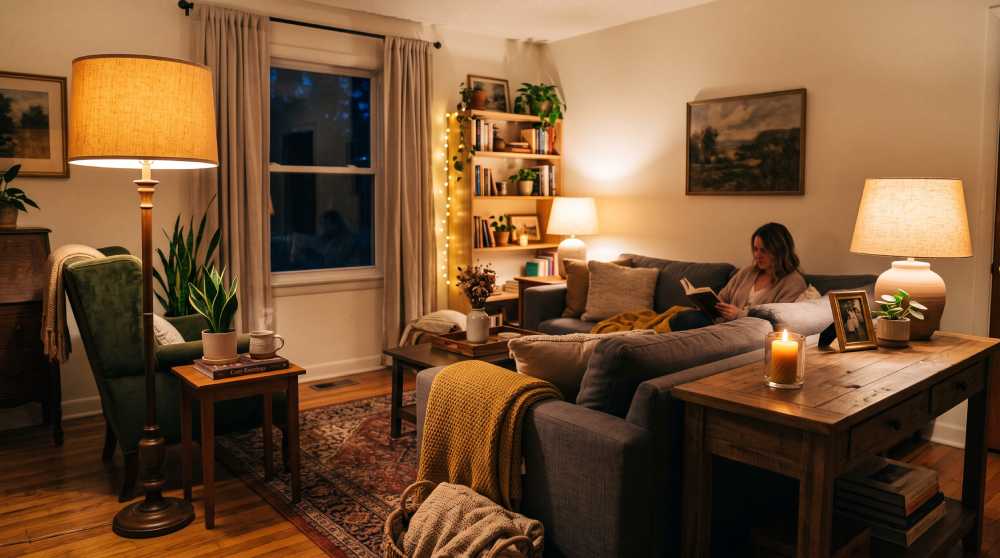
A room can have the right furniture, the right colors and still feel cold, and the reason is almost always overhead. A single ceiling fixture lighting a room evenly from above is efficient, but it’s also the least flattering, least warm way to light a space. The fix is rarely a bigger budget. It’s a handful of specific decisions about where light comes from, what color it is, and how much of it hits any one spot.
Light from three heights, not one
Overhead light alone flattens a room because every surface gets hit at the same angle and the same brightness. Adding a floor lamp in a corner and a table lamp near seating introduces light at two lower heights, which creates the shadow and contrast that a single ceiling fixture never will. This is one detail among several that make a room feel finished overall, and it’s worth reading alongside our broader guide to finishing a room if lighting is just one of several things you’re working on.
Choose a warm bulb color, not just a warm-looking fixture
Bulb color is measured in Kelvin, and it matters more than the lamp it’s screwed into. Bulbs between 2700K and 3000K produce a warm, slightly yellow light close to candlelight or an incandescent bulb, and this range is what most living rooms and bedrooms actually want. Bulbs at 4000K and above shift toward a cooler, whiter or bluish light that suits kitchens and bathrooms where task visibility matters more than atmosphere, but reads as clinical in a room meant to feel relaxed. A beautiful lamp with the wrong bulb color will still feel cold.
Two identical lamps with different bulb temperatures can make the same room feel like two different places.
Use dimmers or lower-wattage bulbs for control
A room lit at full brightness all evening rarely feels cozy, no matter how warm the bulb color is. A dimmer switch, or simply a lower-wattage bulb in a lamp used mainly in the evening, lets the light level match the time of day rather than staying fixed at daytime brightness. This matters most for the lamps closest to where people actually sit and relax, rather than task lighting used for reading or working.
Place lights around the edges of the room
A room lit only from its center, one overhead fixture and nothing else, leaves the walls and corners in shadow, which makes the room feel smaller and less finished. Moving light sources toward the perimeter, a floor lamp in a corner, a lamp on a console against the wall, pulls light out toward the edges of the room and makes the whole space feel more open and evenly warm, rather than lit in a single pool in the middle.
Use light to highlight one thing on purpose
A single directional light, a small picture light over art, an uplight behind a plant, or a spotlight bulb aimed at a shelf, does more for a room’s atmosphere than an even wash of light everywhere. It gives the eye somewhere to land and adds the kind of shadow and contrast that flat, even lighting can’t. Pick one feature per room, rather than trying to highlight everything, or the effect cancels itself out.
Put a lamp where people actually sit
A floor lamp behind a sofa arm or a table lamp on a side table beside it lights the space the way it’s actually experienced, from someone sitting in it, rather than from someone standing and looking down at it. This is part of what makes a sofa area feel inviting rather than just furnished, and our guide to styling a sofa covers how that lamp placement works alongside cushions and a throw.
Get the bedside light right
A bedroom’s main light source is rarely the one that matters most; it’s the bedside lamp, since it’s the light actually used in the hours before sleep. A warm-toned bulb, a shade that diffuses rather than glares, and a height that puts the bulb below eye level when you’re lying down all make a real difference to how a bedroom feels in the evening. Our guide to choosing a bedside lamp goes into the specifics of size and placement.
Add the lowest, warmest layer with a candle
A candle’s flame sits below lamp height and adds a flicker that no bulb replicates, which is why even one lit candle changes a room’s feel more than its light output alone would suggest. Jar shape and wick count affect how much light and warmth a candle actually gives off, which our candle buying guide covers if you’re choosing one for this specifically rather than for scent.
Start with the bulbs already in your lamps. Swapping to a warmer color temperature costs less than almost anything else on this list and changes how a room feels the same evening you do it.