Layered Bedding Ideas: How to Style a Bed That Looks Comfortable and Put Together
A well-made bed isn’t one expensive set. It’s four or five layers working together, and most of them you probably already own.
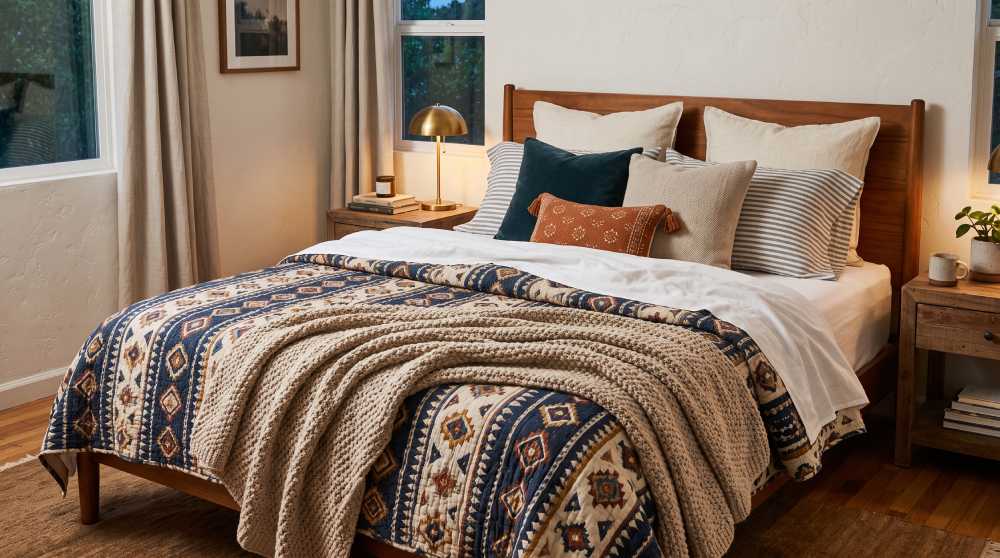
Most beds that look styled are not wearing an expensive set. They are wearing several ordinary layers stacked in the right order, in a way that looks a little undone rather than tightly matched. The bedding itself rarely changes. What changes is how many pieces are on the bed and how deliberately they were placed.
If your bed currently looks flat no matter how nice the sheets are, the fix is almost never a bigger budget. It is adding a layer you skipped, or losing one that is fighting the others.
Start with the base you don’t see
The fitted and flat sheet are the layer that does the most work and gets the least credit, because once the bed is made you barely see them. This is exactly why it’s worth getting right rather than treating as an afterthought: the wrong weave or weight underneath will fight everything you layer on top of it. If you haven’t settled on a go-to sheet, our bed sheet guide covers what actually separates a sheet that feels good from one that just has a high number printed on the packaging.
One simple rule for the base layer: keep it plain and let the layers above it carry the pattern. A busy printed sheet under a patterned quilt is where a bed starts to look cluttered instead of layered.
Choose one middle layer, and know what it’s for
This is where people get stuck, because quilt, duvet and coverlet are often used interchangeably when they are not the same thing.
A duvet is an insert, usually filled with down or a synthetic alternative, that goes inside a removable cover. It is the warmest option and the easiest to keep clean, since only the cover needs washing.
A quilt is a single flat piece, typically stitched through in a pattern that holds its filling in place. It is lighter than a duvet and often the piece doing the visual work, since the stitching pattern shows.
A coverlet is the thinnest of the three, closer to a lightweight blanket than bedding meant for warmth. Its job is mostly decorative: a layer of color and texture over whatever is actually keeping you warm underneath.
You do not need all three at once. Pick the one that matches your climate and how warm you sleep, then treat the other two as options for later in the year rather than things to layer simultaneously.
A bed with one thick, expensive comforter and nothing else usually looks less finished than a bed with three thinner, cheaper layers folded with intention.
Add one layer of texture at the foot of the bed
A folded throw blanket or a woven blanket laid across the lower third of the bed is one of the fastest ways to make a plain bed look considered. It works because it interrupts a large flat surface without covering it, and because a folded texture at the foot draws the eye down the bed rather than leaving it flat from headboard to footboard.
Fold it in thirds and lay it roughly a third of the way up from the foot, rather than draping it loosely across the whole width. A tight, deliberate fold reads as styled; a loosely tossed blanket reads as leftover from last night.
Mix textures before you mix colors
Texture does more for a layered look than color does, and it is the part people skip. A bed made entirely from smooth cotton sheets, a smooth quilt and smooth pillowcases looks flat even in a beautiful color, because nothing catches light differently from anything else.
Aim for at least two different textures in the same bed: a crisp percale sheet against a slightly nubby waffle-weave blanket, or a smooth sateen pillowcase against a chunky knit throw. The contrast is what makes the layers visible from across the room, not just up close.
Keep color simple: one anchor, one accent
The easiest way to avoid a bed that looks mismatched is to limit yourself to one anchor color across the largest pieces, plus one accent color that shows up only in the smaller layers, like a lumbar pillow or the edge of a folded throw.
Neutrals (white, cream, oatmeal, soft gray) work as the anchor almost every time, because they let a patterned quilt or a colorful throw do the work without competing with it. If you want pattern, put it on one layer only. A patterned quilt over a patterned sheet over a patterned throw is three competing patterns, not a coordinated look.
Arrange pillows in a deliberate order, not a pile
Pillows are the layer most people get wrong, usually by either stopping at two standard pillows or piling on too many without any order to them. The arrangement that reads as styled almost always goes largest and plainest at the back, smaller and more decorative toward the front: euro shams against the headboard, standard sleeping pillows in front of those, then one or two smaller accent or lumbar pillows layered on top, slightly off-center rather than perfectly symmetrical. For guidance on how many pillows actually suits your bed size without tipping into excessive, our guide on how many pillows to use breaks it down by bed size.
A small trick that makes a real difference: fluff pillows by squeezing the sides inward rather than patting the top flat. A pillow with some volume at the sides looks intentional. A pillow patted flat looks slept on.
Change the whole look without buying a new set
Once you have a plain, neutral base layer, changing the bedroom’s whole feel becomes a matter of swapping one or two pieces rather than replacing everything.
- Swap the throw and one accent pillow for an instant seasonal change: a chunky knit and warm tones for winter, a lighter linen throw and a cooler accent color for summer.
- Change the coverlet or quilt rather than the sheets underneath, since it covers more visible surface for less cost than a full sheet set.
- Rotate a single patterned pillow cover in and out, since one patterned layer can shift the entire mood of an otherwise neutral bed.
Keeping the base sheets and the pillow arrangement consistent, and changing only the outer one or two layers, is how the same bed can look completely different from month to month without a full bedding budget each time.
Build it one layer at a time rather than buying a whole matching set at once. A bed assembled from pieces chosen separately almost always looks more like a real bedroom, and less like a page from a catalog.