Small-Space Lighting Ideas: How to Make a Small Room Feel Bigger and Brighter
A small room lit badly looks smaller than it actually is. A small room lit well can look larger than its square footage would suggest.
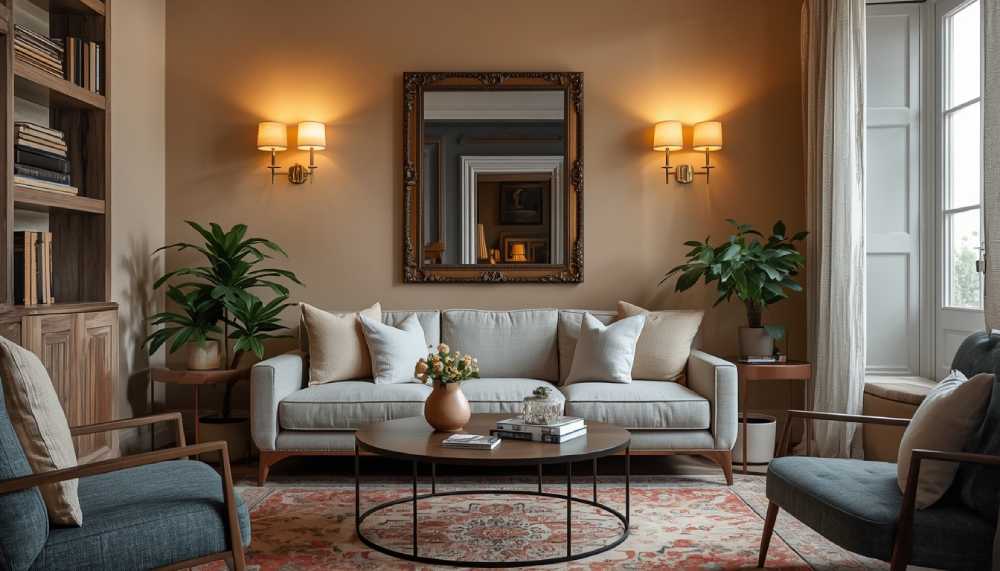
A small room and a poorly lit small room aren’t the same problem, even though they often get blamed on the same thing: not enough square footage. A single overhead light in a compact room creates one bright pool in the center and leaves the walls and corners dim, which is exactly what makes the room’s actual boundaries feel closer than they are. The fixes here are mostly about where light goes and how much floor space the fixtures themselves take up, not about buying brighter bulbs.
Get light onto the walls, not just the floor
A room lit only from directly above lights the floor and leaves the walls comparatively dark, and dark walls read as boundaries the eye stops at. Wall sconces, picture lights, or even a floor lamp with an upward-facing shade all send light up and across the wall surface instead of straight down, which makes the walls themselves feel like they’re receding rather than closing in. This is the single biggest difference between a small room that feels tight and one that feels merely cozy.
Free up floor space with wall-mounted fixtures
Every floor lamp and side table takes up footprint that a small room can’t spare. Swapping one floor lamp for a wall-mounted sconce or a plug-in wall light reclaims that square footage entirely, and the room reads as more open simply because there’s less furniture-like bulk sitting in it. This matters more in a small space than a large one, where the same lamp barely registers against the available floor area.
A small room doesn’t just need less light. It needs the same amount of light coming from fewer things sitting on the floor.
Use a mirror to double the light you already have
A mirror placed to reflect a window or a lamp doesn’t just add visual depth, it genuinely bounces light back into the room, which is a real gain in a small space where every light source counts twice as much. Position it opposite the room’s main light source rather than facing a blank wall, so it’s actually catching and reflecting something. Our guide to choosing mirrors covers what else to look for if you’re shopping for one specifically for this.
Choose lamp scale carefully
An oversized lamp in a small room competes with the room itself for attention and eats into already-limited surface space. A lamp that’s too small, on the other hand, underlights its corner and looks like an afterthought. As a rough guide, a table lamp’s shade should sit roughly a third to half the height of whatever it’s placed on, and its overall footprint shouldn’t dominate a small side table. Getting this scale right matters more in a small room, where there’s no extra visual space to absorb a mismatch.
Brighten the corners on purpose
Dark corners are one of the fastest ways a small room starts to feel boxed in, since an unlit corner reads as a dead end rather than usable space. A small uplight, a slim floor lamp, or even an LED strip tucked behind furniture aimed into a dark corner opens that space back up visually, even though nothing about the corner’s actual size has changed.
Keep the bulb color and layering consistent with the rest of the room
The core mechanics of good lighting, warm bulb color, light at more than one height, dimming for control, apply just as much to a small room as a large one, and getting them right does most of the work before any small-space-specific tricks come into play. Our guide to warmer room lighting covers those fundamentals in full if you’re starting from scratch.
Avoid these small-space lighting mistakes
- A single ceiling fixture and nothing else. It’s the fastest way to leave every wall and corner in shadow.
- Cool white bulbs. A bluish, clinical light tends to feel more sterile and makes a compact space feel more like a utility room than a lived-in one.
- Too many separate light pools with dark gaps between them. Several small lamps that don’t overlap their light can create more visual chaos than one well-placed wall light.
- Bulky floor lamps in a room with limited walking space. A wall-mounted alternative solves both the lighting and the floor-space problem at once.
If you’re tackling a small room’s overall feel rather than just its lighting, our guide to making a small room look bigger with a rug works through the same goal from the floor up.
Start by getting light onto the walls instead of just the floor. It’s the single change that does the most to make a small room feel like it has room to breathe.