The Low-Lift Refresh: How to Transform Any Room Without Renovation or Real Demo
A tired room rarely suffers from bad framing studs; it almost always suffers from stagnant spatial habits, institutional lighting, and flat surfaces. All three are fixable in forty-eight hours.
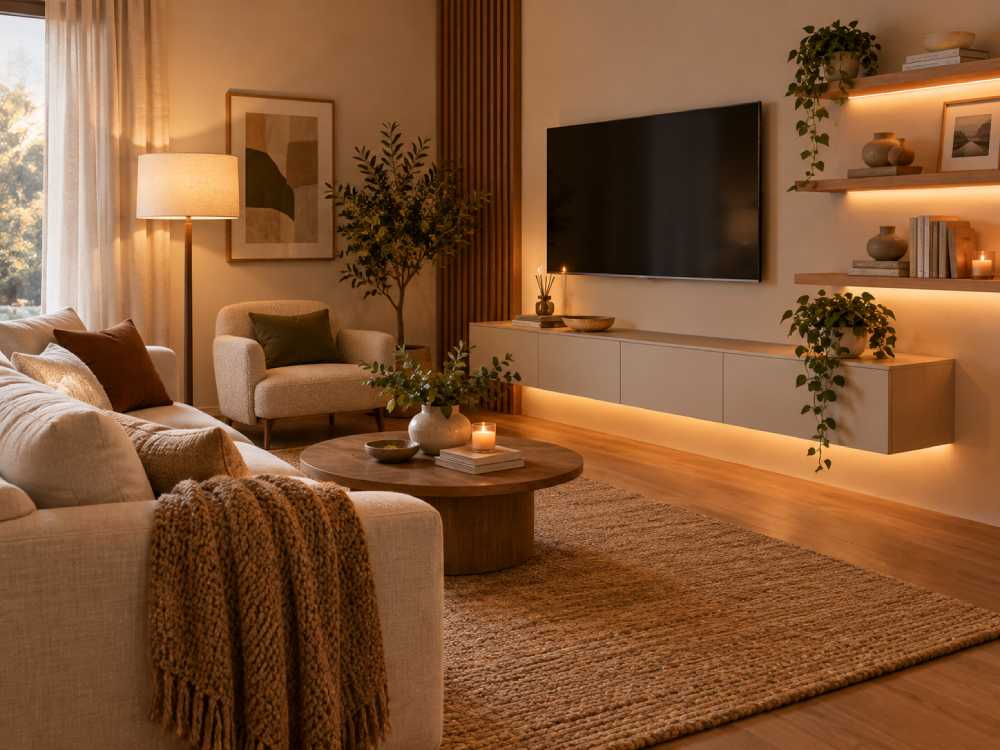
When a bedroom, home office, or living room feels stale, the immediate reaction is often disproportionate: we start browsing floor plan alterations, pricing custom built-in cabinetry, or scrolling contractors for full demolition quotes. But true structural renovation is a loud, expensive sledgehammer aimed at what is almost always an atmospheric problem.
How a room actually feels to exist in is governed by physics that have nothing to do with load-bearing walls. It is dictated by the clearance around your seating, the color temperature of your bulbs at eye level, the tactile friction under your feet, and the visual weight anchored along your walls. Shift those four variables and you can transform an uninspired room over a single weekend without filling a single trash bag with drywall dust.
1. Break the Perimeter Habit and Float Your Layout
The most common layout instinct in residential interiors is what designers call the waiting room trap: pushing every single sofa, credenza, and accent chair flush against the perimeter baseboards. While pushing furniture out seems like a logical way to preserve open floor space, it actively deadens the room. It flattens the volume, leaves an awkward, unused void in the center, and forces seated guests to shout across a cavernous gap.
Pulling your furniture inward instantly activates negative space and creates functional conversational zones:
- Float the primary seating: Pulling your sofa just four to six inches away from the wall immediately creates breathing room behind the frame, signaling that the piece was positioned with intention rather than parked against a barrier.
- Establish perpendicular conversation: Place accent chairs at a 90-degree angle to the sofa rather than directly opposite it. This closes the conversational loop and creates natural walking corridors behind the seating rather than cutting straight through it.
- Claim a single visual anchor: If your room lacks an architectural fireplace or a large picture window, assign an anchor deliberately. Center an oversized credenza, style an open bookcase with breathing room, or hang a substantial piece of framed art to give the eye a natural place to land upon entering.
The clearance rule: Keep major walking paths between furniture groupings at a minimum of 30 to 36 inches. Anything narrower feels like an obstacle course; anything wider than 48 inches severs the visual connection between conversational pieces.
2. Turn Off the “Big Light” and Layer 2700K Sources
Nothing washes the architectural character out of a room faster than relying exclusively on a central ceiling fixture. A single flush-mount bulb overhead casts downward shadows beneath furniture, highlights surface imperfections on drywall, and makes living spaces feel like clinical exam rooms.
A room’s mood resets the moment you kill the overhead switch and distribute illumination across three distinct vertical levels:
- Low-level perimeter glow: Place small table lamps on side tables, console ends, or low open shelves. Casting light outward at table height softens room boundaries and eliminates dark, uninviting room corners.
- Mid-height functional task pools: Position an adjustable reading floor lamp or a downward-focused task sconce right beside an armchair. This creates an intentional, focused cone of light that invites relaxation without flooding the rest of the space.
- Upward architectural bounce: A discreet uplight or small floor canister tucked behind a large potted plant bounces soft, indirect illumination off the ceiling, visually expanding the height of the room without introducing overhead glare.
The 2700K standard: Check the Kelvin rating on every bulb you install. Cool white bulbs (4000K to 5000K) replicate commercial office lighting and flatten warm finishes. A warm white 2700K LED bulb provides the amber undertones needed to soften drywall and bring out natural wood grains.
3. Introduce Tactile Friction and Layered Textiles
Visual fatigue often sets in when a room contains too many hard, reflective surfaces. If an interior is dominated by laminate flooring, glass coffee tables, and bare drywall, it feels physically cold regardless of your wall color. Introducing tactile friction changes both the acoustic behavior and the physical perception of the space.
Anchor the room with rug layering. If replacing a wall-to-wall carpet or an undersized living room rug is outside the immediate budget, layer directly over it. Rolling out an oversized, inexpensive natural jute or flat-weave sisal rug as a wide foundation—and layering a smaller, patterned vintage runner or plush wool accent rug directly on top—anchors your seating grouping while dampening acoustic room flutter.
Swap out low-grade hardware touchpoints. The small mechanical details you touch daily establish your subconscious baseline of a room’s quality. Replacing generic builder-grade cabinet pulls and dresser handles with solid brushed brass, matte black iron, or fluted timber knobs takes less than an hour with a screwdriver, but it fundamentally elevates standard cabinetry.
Correct your curtain hanging geometry. Most off-the-shelf curtain panels are hung directly against the window casing, visually shrinking the opening and blocking valuable daylight. Mount your curtain rod four to six inches above the window moulding—just below the ceiling line—and extend the brackets six to eight inches past the window frame on each side. When hung high and wide, full-length linen-blend drapes draw the eye upward and make ceilings feel significantly higher.
4. Deploy High-Impact Paint and Textured Wall Accents
When you want a visible, unmistakable transformation between Friday evening and Sunday night, strategic color application delivers the highest return on investment. You do not have to commit to taping off and rolling all four walls to redefine a room’s mood.
- The half-wall color block: Painting the lower third of a room in an earthy clay, deep sage, or warm olive while keeping the upper wall a creamy off-white grounds your low-slung furniture without shrinking the room’s perceived volume.
- Drenching interior doors: Leaving walls neutral while painting bedroom, pantry, or closet doors in a rich contrasting tone—such as deep forest green, dark charcoal, or warm taupe—instantly turns standard flat-panel hollow-core doors into tailored architectural statements.
- Textured peel-and-stick backing: Modern peel-and-stick wallpapers have evolved beyond flat printed vinyl. Applying a grasscloth or subtle linen-weave removable paper to the back of an open bookcase, an entryway niche, or a headboard recess introduces tactile depth that peels off cleanly whenever you want to change it.
The Short Version
Pull your furniture a few inches off the walls to let the room breathe, and keep conversation groupings anchored around a singular focal point. Turn off central overhead fixtures in favor of layered table and floor lamps fitted strictly with warm 2700K bulbs. Introduce physical friction underfoot with layered area rugs, correct your curtain rod height to maximize vertical window scale, and use high-contrast door paint or removable textured paper to shift the room’s identity in a single weekend.